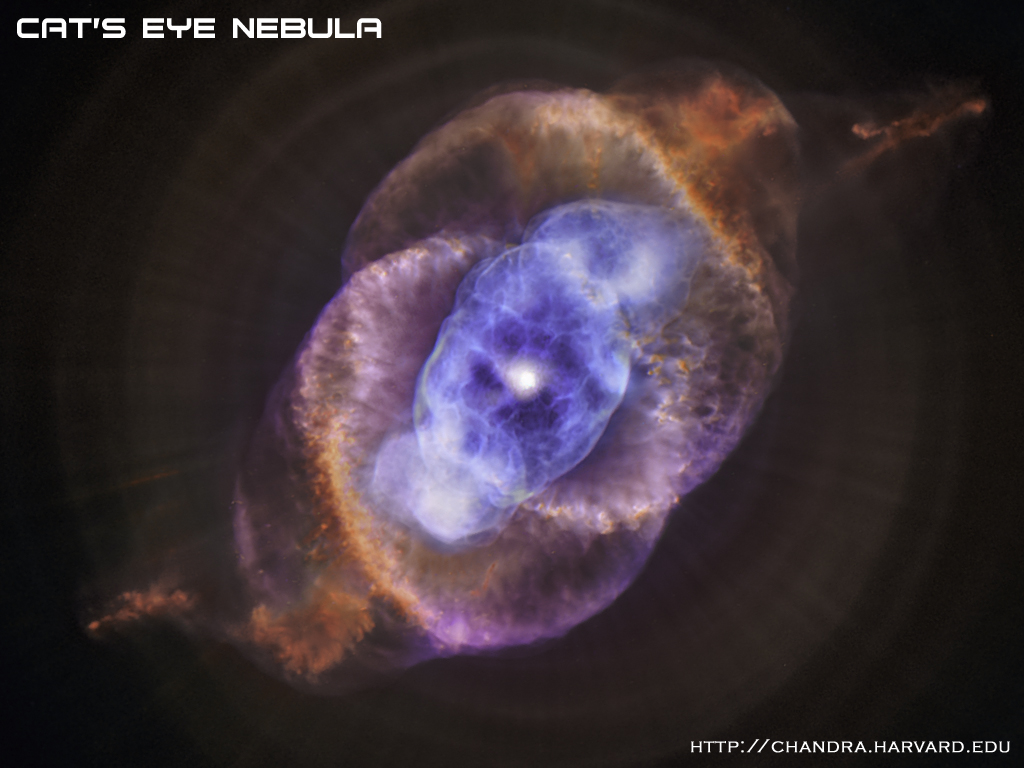
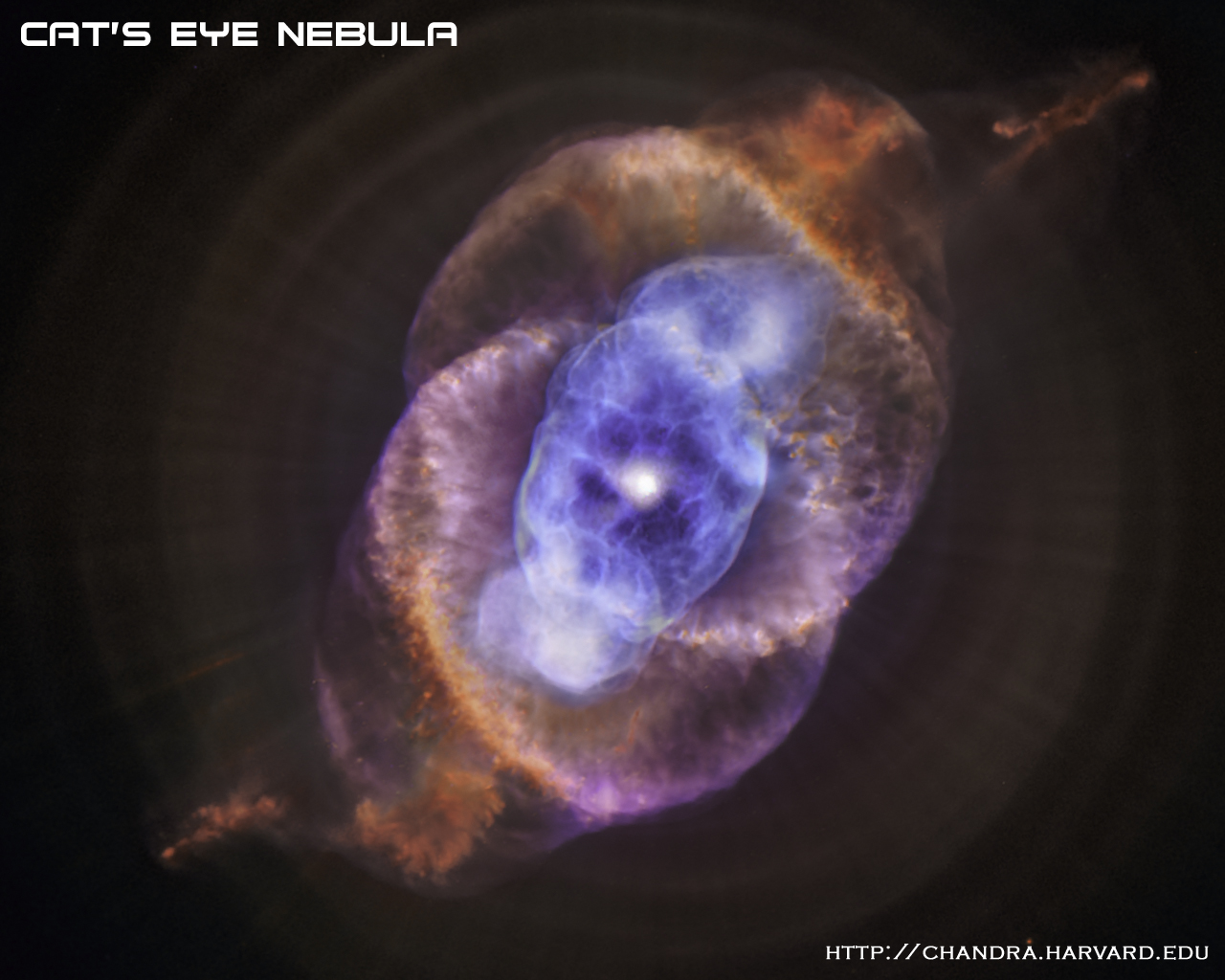
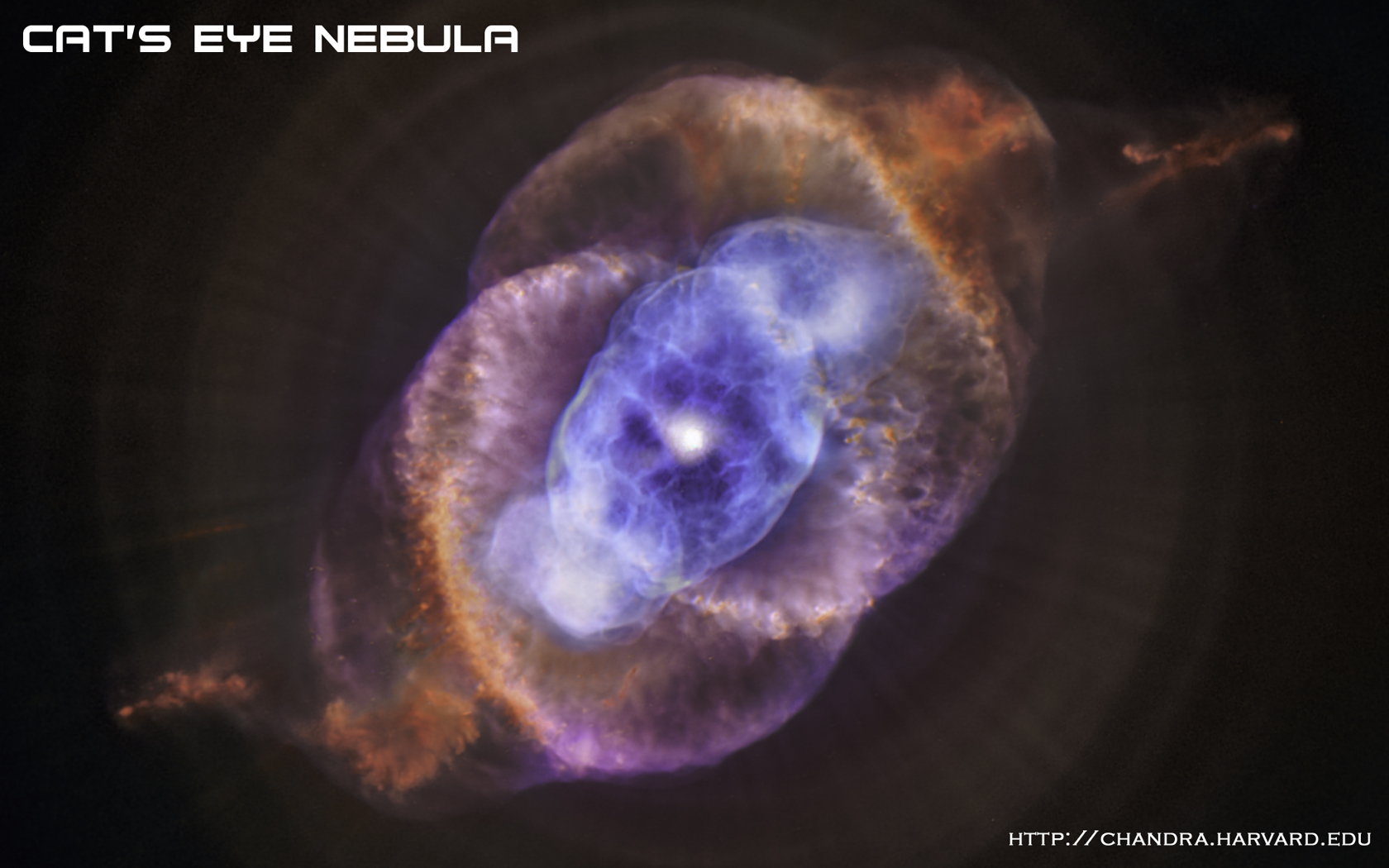
This composite of data from NASA's Chandra X-ray Observatory and Hubble Space Telescope is a new look for NGC 6543, better known as the Cat's Eye nebula. This famous object is a so-called planetary nebula that represents a phase of stellar evolution that the Sun should experience several billion years from now. When a star like the Sun begins to run out of fuel, it becomes what is known as a red giant. In this phase, a star sheds some of its outer layers, eventually leaving behind a hot core that collapses to form a dense white dwarf star. A fast wind emanating from the hot core rams into the ejected atmosphere, pushes it outward, and creates the graceful filamentary structures seen with optical telescopes.
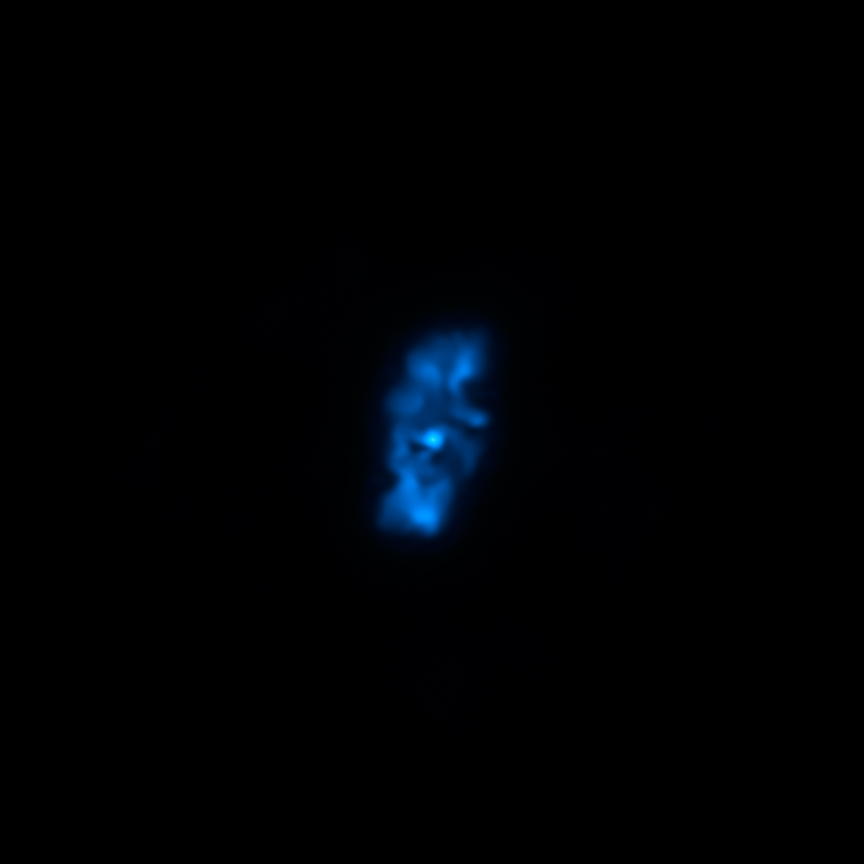
Chandra's X-ray data (colored in blue) of NGC 6543 shows that its central star is surrounded by a cloud of multi-million-degree gas. By comparing where the X-rays lie in relation to the structures seen in optical light by Hubble (red and purple), astronomers were able to deduce that the chemical abundances in the region of hot gas were like those in the wind from the central star and different from the outer cooler material. In the case of the Cat's Eye, material shed by the star is flying away at a speed of about 4 million miles per hour. The star itself is expected to collapse to become a white dwarf star in a few million years.
| Fast Facts for NGC 6543: |
| Credit |
X-ray: NASA/CXC/SAO; Optical: NASA/STScI |
| Release Date |
July 30, 2008 |
| Scale |
Image is 1.2 arcmin across. |
| Category |
White Dwarfs & Planetary Nebulas |
| Coordinates (J2000) |
RA 17h 58m 33.30s | Dec +66'° 37' 59.20" |
| Constellation |
Draco |
| Observation Date |
May 10, 2000
|
| Observation Time |
13 hours |
| Obs. ID |
630
|
| Instrument |
ACIS
|
| Color Code |
X-ray (blue); Optical (orange, purple) |
| Distance Estimate |
About 3,000 light years
|
|










Always my favorite nebula, thanks to infinity.
Posted by Aaron T on Friday, 04.20.18 @ 16:33pm
So wonderful. Thank you for posting these.
Posted by Alice on Monday, 05.19.14 @ 09:07am
What a magnificent composite. I am so grateful you guys release these amazing gems to the public. Thank you
Posted by Jon Hebel on Sunday, 02.23.14 @ 00:47am