General

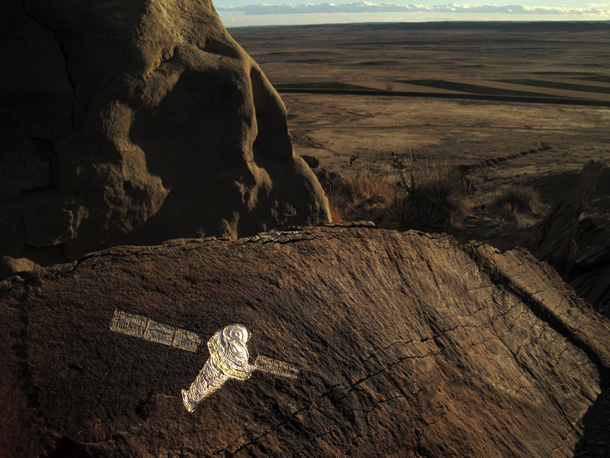
Happy Anniversary, X-rays!

Today, Google is marking the 115th anniversary of the discovery of X-rays by William Roentgen, a German physicist. Here at the Chandra blog, we are not sure if this exact date is the most important one, but we do know that he made his discovery some time during 1895. And, hey, we are always in the mood for a little celebration of all things high-energy.
Chandra, Cosmos and Chemistry
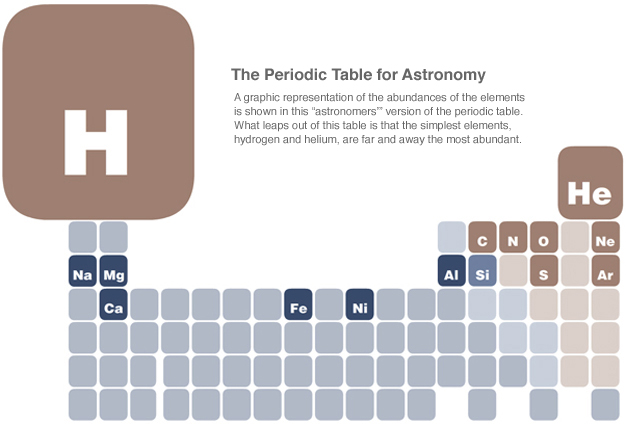
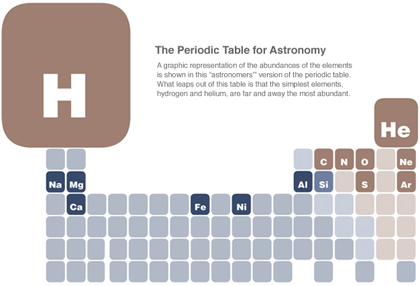
The year 2011 has been proclaimed (by the United Nations and a host of other proclaimers) to be the International Year of Chemistry, a worldwide celebration of the achievements of chemistry and its contributions to the well-being of humankind.
Accelerating Returns in X-ray Astronomy
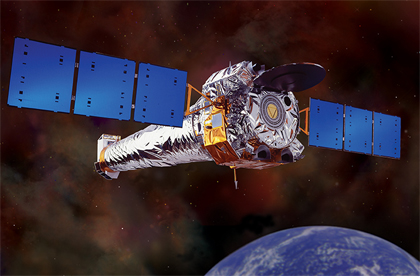
In its relatively short 50 year history, the field of X-ray astronomy has shed a whole new light on our view of the universe, and has seen a dizzying rate of technological advancement. Prior to the 1960's, only the Sun was a known source of high energy radiation in X-rays and gamma-rays. These wavelengths of light are absorbed by Earth's atmosphere, so X-ray astronomy depended on advancements in rocketry and space science to be fully explored.
Image Genetics: Astronomy Visualization Metadata (AVM)
A random image of a mountainous landscape may be beautiful, but without some context and background information, i.e. metadata, you will likely have no idea where in the world the picture was taken, or even exactly what it is that you're looking at. Questions such as "How tall is that mountain?" "How far away is it from the photographer?" or "Where and when was this picture taken?" are all virtually impossible to answer just by looking at the image.
World Class Competition
While most of the world was focused on that little soccer tournament in South Africa, astrophysicists were involved with their own form of competition last week. As they do every year, experts from around the globe gathered to conduct the Chandra Peer Review process. This is the way that astronomers figure out what targets Chandra will observe over the course of the next year. Most major telescopes – such as Hubble and Spitzer -- have a similar process. And as they say about democracy, it's not a perfect system but it’s better than just about any other.
Elemental Change
Recently, I attended a memorial service for Geoffrey Burbidge, who was my thesis advisor many years ago. He was eulogized for his pioneering work in several fields of astrophysics. In the 1950's, he was the first to determine the enormous energies involved in the giant radio sources, calculations still used today in studying the process of black hole feedback in galaxy clusters. He and his wife Margaret were leaders in documenting violent events occurring in what they called active galactic nuclei, or AGN, as they are commonly called today. They also paved the way for work that eventually led to the conclusion that the universe is dominated by dark matter, a peculiar substance whose nature is still not understood.
Heaven and Earth
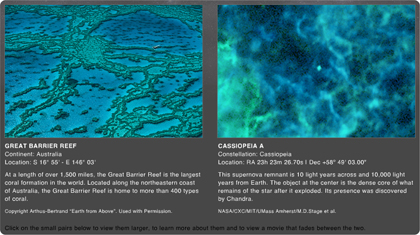
There are a lot of reasons why people like astronomy. For some, it's the topics it covers like black holes, exploded stars, and distant planets. For others, it's the sense of awe that the cosmos inspires. There are also lots of people that just think the images are beautiful and worth gazing at. And, for most, it’s some combination of these and others that make them want to learn more about astronomy.