
General
Some Super Bowl Physics (And a Little Bit of the Cosmos)
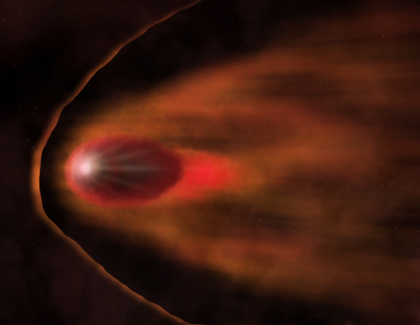
The good folks over at Cosmic Variance have blogged about a "Sports Science" segment that analyzes how well (and accurately) the New Orleans Saints quarterback Drew Brees throws the football. There's a little discussion about whether or not Brees is more accurate than an Olympic archer, but what caught our eyes and ears was the spin rate of the football they estimate Brees gives the ball.
The "Year In Review" That Wasn't
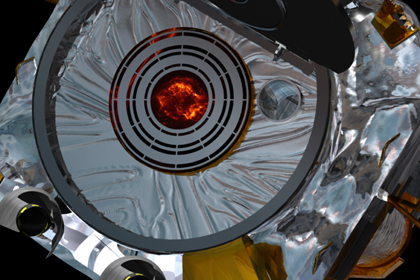
When we get to this point in the calendar, the "year in review of fill-in-the-blank" lists just come out in droves. You can't seem to drive to the mall without running over a "best of 2009" compendium of something or other. It's as if we have all had collective amnesia over the past 12 months and are required to be subjected to a crash review course of the year that was.
Thanksgiving Prep: Preheat at 90 for 15 minutes
John Scott is a mission planner for Chandra's Flight Operation Team, and from time to time provides an inside look for the outside world on just how people take care of this remarkable spacecraft. This entry has a bit of a mystery in the second half of the title. If you have a guess to what it means to "Preheat at 90 for 15 minutes," then post it to the comment section. (Note to the rest of the Flight Ops Team: you're not eligible!) If someone comes up with the right answer - or close to it - we'll send you a Chandra poster.
As most of the nation will spend the Thanksgiving holiday devouring a stuffed turkey in the warmth of their dining room, the Chandra X-ray Observatory will give thanks for the three batteries that will keep it powered during the first day of its 22nd eclipse season. With only three and a half weeks of eclipses (eight eclipses total), this season will be brief when compared to the upcoming eclipse seasons in the following few years.
Chandra Hosts a Carnival Of Space
This week, the United States marks the Thanksgiving holiday. For most of us, this means lots of time with family (sometimes too much), friends, and vast amounts of food. It also causes all productivity to cease anywhere close to Thursday and the days that follow. That said, however, science and space never sleep - not even from an overdose of tryptophan.
Chandra Source Catalog: Onto the Google Sky (Part 2)
As the Chandra Source Catalog was being finalized for release (documents updated, final verifications being performed, etc.) we had some time to try a little experiment:
As part of the Catalog, we produce so-called "3-color" JPEG images: red representing low energy, green = medium energy, and blue = high energy. We thought it would be interesting to learn enough of the Keyhole Markup Language (kml) to enable these images to be viewed with Google Earth in its Sky mode.
Chandra Source Catalog: Onto the Google Sky (Part 1)
From time to time in the Chandra blog, we like to give a look at the behind the scenes of how things really work around here. As you may suspect, it takes a lot of effort from many, many people to make this mission a success. One area we haven't delved into too much yet is the "data analysis" and other herculean efforts that are required to make the Chandra data as useful and user-friendly as possible to the scientific community.
Three Important Letters and The Nobel Prize
Yesterday, the Nobel Prize for Physics was announced by the Royal Swedish Academy of Sciences. As they often do, the Academy split the prize, with one half being shared by two scientists - William S. Boyle and George E. Smith - for their work on CCD sensors.
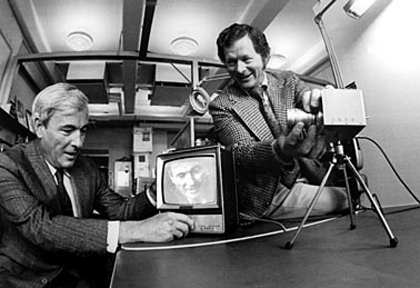
William S. Boyle (left) and George E. Smith in a shot taken in 1974. © Alcatel-Lucent/Bell Labs
Beginning Chandra's Next Decade of Discovery
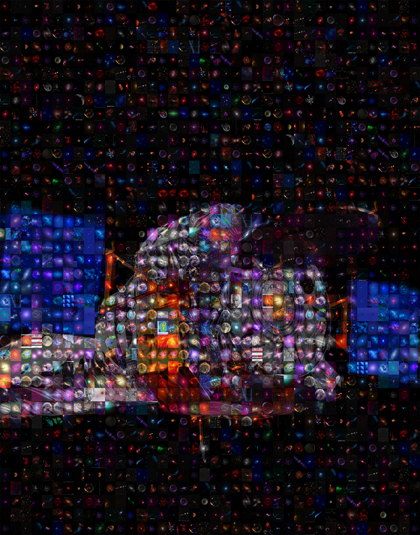
This week, about 200 scientists are gathered in Boston to describe, discuss, and dissect the past ten years of Chandra science. The symposium, dubbed "Chandra's First Decade of Discovery," has some exciting happenings. First, the astronauts from STS-93, the Space Shuttle mission that launched Chandra into orbit back in July 1999, are here. They are going to participate in a session this afternoon on "The History of Chandra." In addition to the astronauts, key scientists responsible for Chandra being the success that it is will be on hand. Tomorrow, Nobel-Prize winner Riccardo Giacconi will address the conference. Dr. Giaconni won the Nobel for physics for his work in the field of X-ray astronomy, including, of course, Chandra.
Hub of the Universe
Everyone around here knows that Boston likes to consider itself the "Hub of the Universe". This month, it really is. Opening this weekend, two outdoor exhibitions - at the Museum of Science and UMass-Boston – will help Bostonians explore their place in the cosmos.
Those of you who are regularly readers of the Chandra blog already have heard a great deal about this project. But for the rest of you, here's some background.
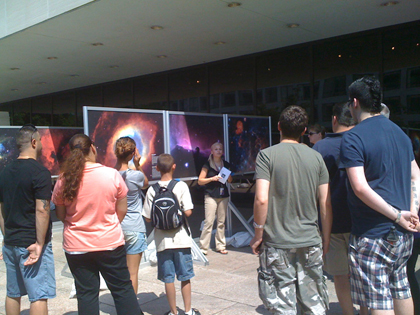
A previous stop of the traveling exhibit, in Washington DC
Back To School: Three Simple Ways to Share the Universe With Your Child
Parents can play an important part in helping their child explore the world around them. Space might seem far out there, but it can ignite your child's imagination — and can cause them to zip around your living room pretending to be a rocket among the outer planets.
We have developed a lot of educational Chandra activities and products to do just that (ignite your child's imagination that is, not send them to the outer planets!). Here are three easy things to try with your young child (ages 5-8) to bring a little bit of Chandra and the rest of the Universe right to them.
