



CXC Home | Search | Help | Image Use Policy | Latest Images | Privacy | Accessibility | Glossary | Q&A
1
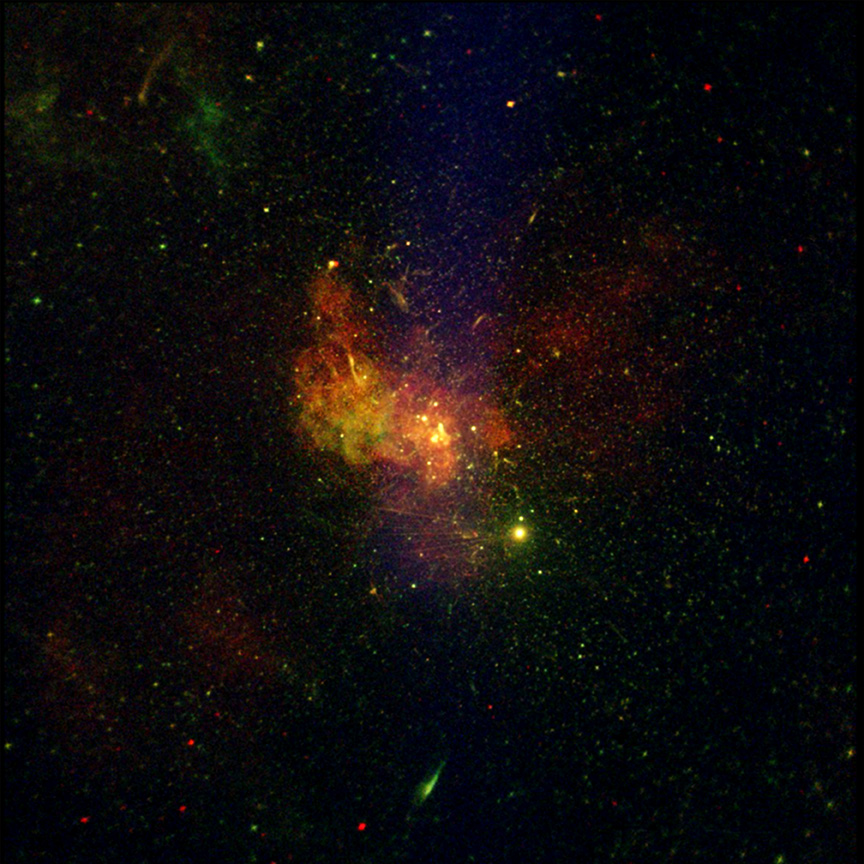
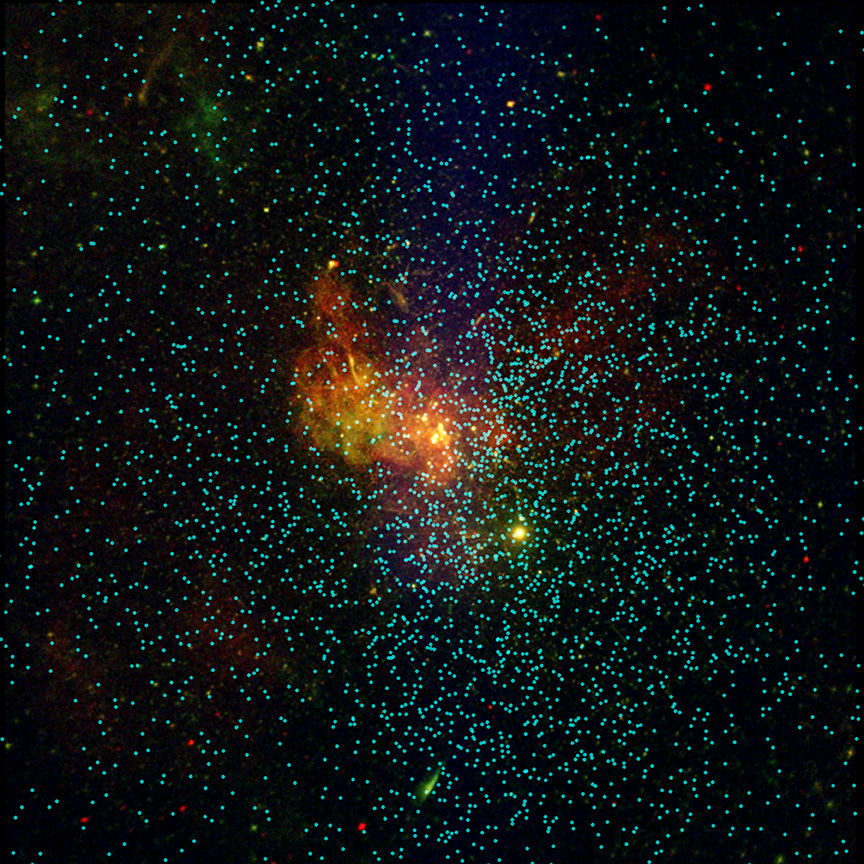
X-ray Images of Sagittarius A*Credit: X-ray: NASA/CXC/SAO; Image Processing: NASA/CXC/SAO/N. Wolk
This image is the sum of 86 observations added together, representing over three million seconds of Chandra observing time. It spans just about 60 light-years across, which is a veritable pinprick on the entire sky. The underlying image contains lower-, medium-, and higher-energy X-rays in red, green, and blue respectively. The annotations on the image show where Chandra has detected over 3,300 individual sources in this field of view over a 22-year timeframe.
Tactile Products
(3D Print Credit: NASA/CXC/A. Jubett, using software by Tactile Universe/N. Bonne & C. Krawczyk & Blender)
2
3D Printable Files: Sagittarius A* (without X-ray sources marked)(3D Print Credit: NASA/CXC/A. Jubett, using software by Tactile Universe/N. Bonne & C. Krawczyk & Blender)
3
3D Printable Files: Sagittarius A* (with X-ray sources marked)(3D Print Credit: NASA/CXC/A. Jubett, using software by Tactile Universe/N. Bonne & C. Krawczyk & Blender)
This pair of tactile plates are physical relief maps based on the intensity of very deep Chandra X-ray data from around the Sagittarius A* supermassive black hole, located in the center of the Milky Way galaxy. The plates each feature an area that seems both intricate and full, with a dense population of tiny dots, along with larger clumps and diffuse areas and nebulous areas peeking through. At the center of each plate, there is a dense lumpy area representing the intense X-ray radiation emanating from the Sagittarius A* black hole. In the surrounding area, there are more smaller lumps layered throughout, feathering out to a large almost butterfly shape filling much of the plate. The plates are textured, like dozens of worms are paused in their wriggling. The plates offer an unprecedented expanse of lobes of hot gas extending for a dozen light years on either side of the black hole. These lobes provide evidence for powerful eruptions occurring several times over the last ten thousand years. The plates also contain several mysterious X-ray filaments, some of which may be huge magnetic structures interacting with streams of energetic electrons produced by rapidly spinning neutron stars. Such features are known as pulsar wind nebulas. Chandra has detected over 3,300 individual sources that emit X-rays in this field of view, which appear as raised dots all over the second plate in the series. This plate depicts the sum of 86 observations added together, representing over three million seconds of Chandra observing time.
Return to: NASA's Chandra Releases Deep Cut From Catalog of Cosmic Recordings (January 23, 2026)


Revised: January 23, 2026