
General
What Chandra & X-ray Astronomy Give Back
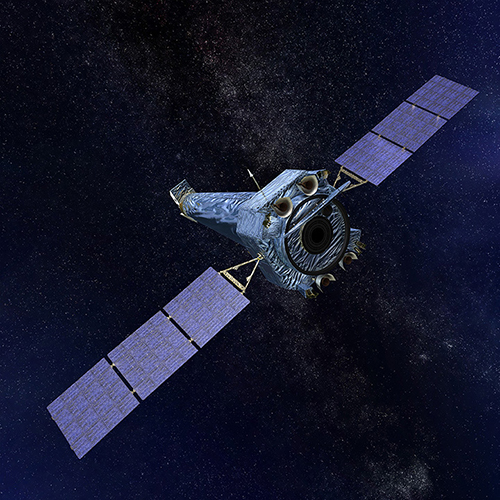
Illustration of Chandra X-ray Observatory
This week marks the 18th anniversary of Chandra’s “First Light,” when the first publicly available images from NASA’s flagship X-ray mission were released back in 1999 . Week after week, month after month, year after year, Chandra continues to deliver amazing results and make truly extraordinary discoveries across space. Scientists know so much more about the Universe now than we did before this amazing telescope began its work.
Black Holes and Vacuum Cleaners: Using Metaphors to Explain Space Images
Scientific imagery, especially those from space, can be both powerful and beautiful. The images created by professional and amateur astronomers alike are often striking. This gives science communicators an opportunity to use such images as an access point for the related subject matter. In other words, scientific images are a door through which we can walk towards the discoveries and insight that science can achieve.
The Aesthetics & Astronomy project (A&A) is a unique research project that aims to study exactly how people from different backgrounds and educational experiences interpret and interact with scientific imagery. Started at the Chandra X-ray Center and combining the expertise of astrophysicists, psychologists, image producers, and educators specializing in research methodology, A&A delves into how these images can be used as a vehicle for scientific information.
One question that A&A recently asked is: how effective are metaphors in communicating scientific results? To explore this question, the A&A project solicited input from nearly 2,000 participants and asked a series of questions through an online study. After presenting participants with four astronomical images — Sagittarius A*, Our Sun (solar flare), Cassiopeia A, and the Pinwheel Galaxy — they were shown three separate labels for each.
Carnival of Space
It’s Carnival time, folks, so let’s get started! Here is a brief look at interesting space stories from the past week.
At Universe Today, their writers have got the Universe covered. In one post, they take a look at an intriguing new result that may help tie "Joshua's Eclipse" to the Battle of Gibeon, showing how astronomy can help make connections in other fields such as history. https://www.universetoday.com/133166/ancient-annular-dating-joshuas-eclipse/

Processed image taken on Dec. 11, 2016, at 9:27 a.m. PST (12:27 p.m. EST) by the NASA Juno spacecraft, as it performed its third close flyby of Jupiter. Credits: NASA/JPL-Caltech/SwRI/MSSS/Eric Jorgensen
In another post, they explain the most recent exciting pass of the Juno spacecraft over the cloud tops of Jupiter. NASA is also offering the public the chance to vote on what features Juno should image next. Take a look! https://www.universetoday.com/133215/juno-buzzes-jupiter-cloud-tops/
Chandra’s Arcand Wins Smithsonian Education Award
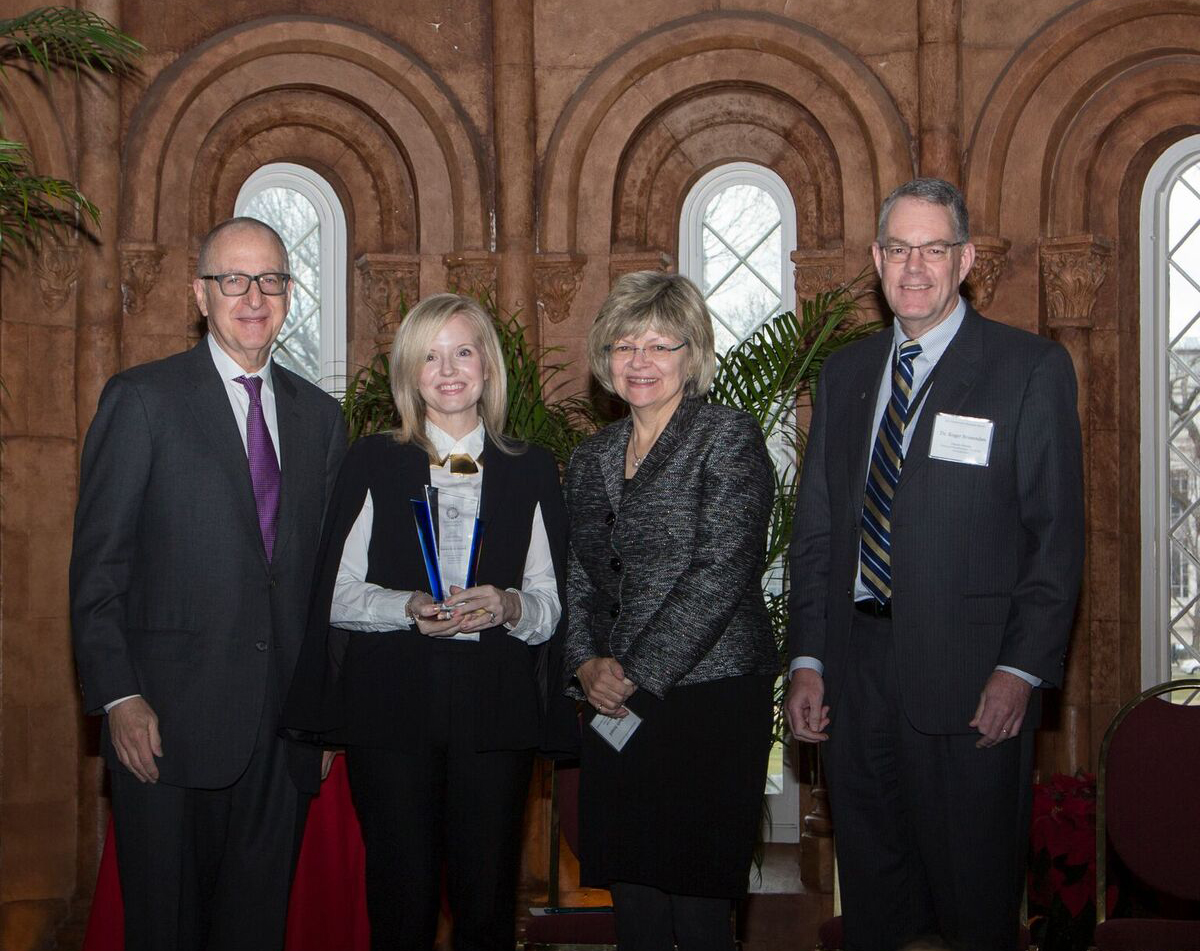
SI Secretary Skorton, Kim Arcand, Patricia Bartlett, Roger Brissenden (Credit: Smithsonian)
Many people associate the Smithsonian Institution with a handful of museums on the National Mall in Washington, D.C., when, in fact, the Smithsonian consists of 19 museums, 9 research centers, a zoo, and affiliates around the world.
One fact that may not be known to some is that NASA’s Chandra X-ray Observatory is inextricably linked with the Smithsonian. The Smithsonian Astrophysical Observatory (SAO) in Cambridge, Mass., was at the center of the conception and development of the telescope and today it controls Chandra’s science and flight operations. In other words, Chandra is both a NASA and a Smithsonian mission.
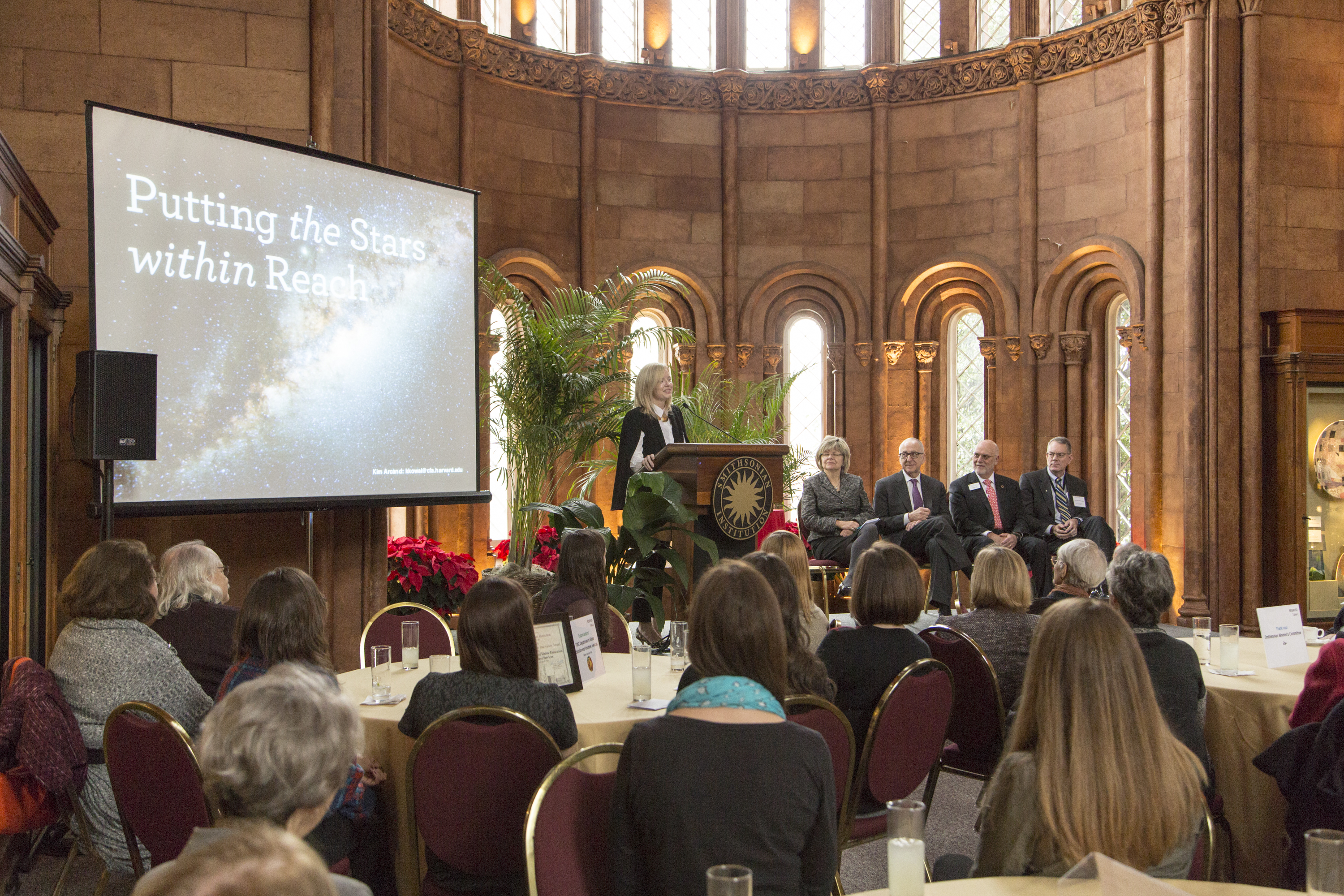
Kim Arcand (Credit: Smithsonian)
One of the core tenants of the Smithsonian’s mission is the “increase and diffusion of knowledge.” This means that education and outreach can often take center stage at the Smithsonian. To highlight the important role education plays, the Smithsonian gives out one award every year to an employee that recognizes “creativity, excellence, and commitment to serving the nation through educational programming, exhibits, publications, and digital media.”
We are thrilled to announce that this year’s winner for the 2016 Smithsonian Education Achievement Award is Chandra’s visualization lead, Kimberly Arcand. Arcand was presented with the award on December 8, 2016 at the Smithsonian Castle in Washington, D.C. Among the Chandra-led projects being recognized were the NASA-funded public science programs "From Earth to the Universe" "Here, There & Everywhere," and “Light: Beyond the Bulb,” as well as Chandra community programs for girls and boys to improve coding skills with NASA data, and cutting-edge Chandra data visualization projects such as data-based 3D printed supernova remnants.
Discovering the Treasures in Chandra's Archives
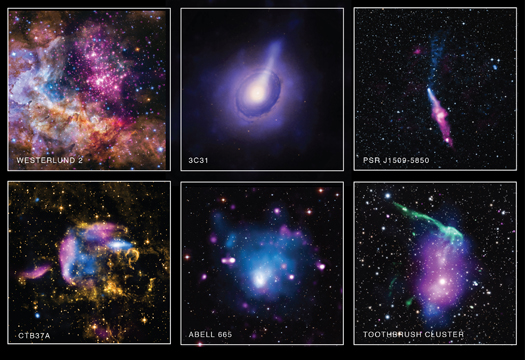
Each year, NASA's Chandra X-ray Observatory helps celebrate American Archive Month by releasing a collection of images using X-ray data in its archive.
BEHIND THE SCENES OF ‘ASTROLYMPICS’

On August 5th, the 2016 Olympic Summer Games will begin with the Opening Ceremonies in Rio de Janeiro, Brazil. A new project from NASA’s Chandra X-ray Observatory and its Communications group takes a look at the amazing feats performed by Olympic athletes and tries to provide context for them in an innovative way.
The 'Astrolympics' Open in Time for Summer Games

With the Olympic Games in Rio nearly ready to begin, an innovative project blending science and sports is being unveiled. “AstrOlympics” relates the amazing feats of Olympic athletes with the spectacular phenomena found throughout space.
This latest project from NASA’s Chandra X-ray Observatory Communications group highlights the physical connections between sport and space. Examining various topics including speed, distance, time, mass, rotation, and pressure, AstrOlympics explores the impressive range of these different physical properties.
Help Wanted: A Universe of Images

Images of our shared Universe provide snapshots of various phases of life and death, and different physical phenomena, found in locations across the cosmos. Modern telescopes allow us to “see” what the human eye cannot. This new generation of ground- and space-based telescopes has created an explosion of images for people everywhere to explore.
The Aesthetics & Astronomy project studies the perception of multi-wavelength astronomical imagery and the effects of the scientific and artistic choices in processing this astronomical data. The images come from a variety of space and ground-based observatories, including NASA’s Chandra X-ray Observatory and Hubble Space Telescope. Studies such as these can benefit astronomy across the electromagnetic spectrum of astronomical images, and may help visualization of data in other scientific disciplines.
New X-ray Observatory Comes Online
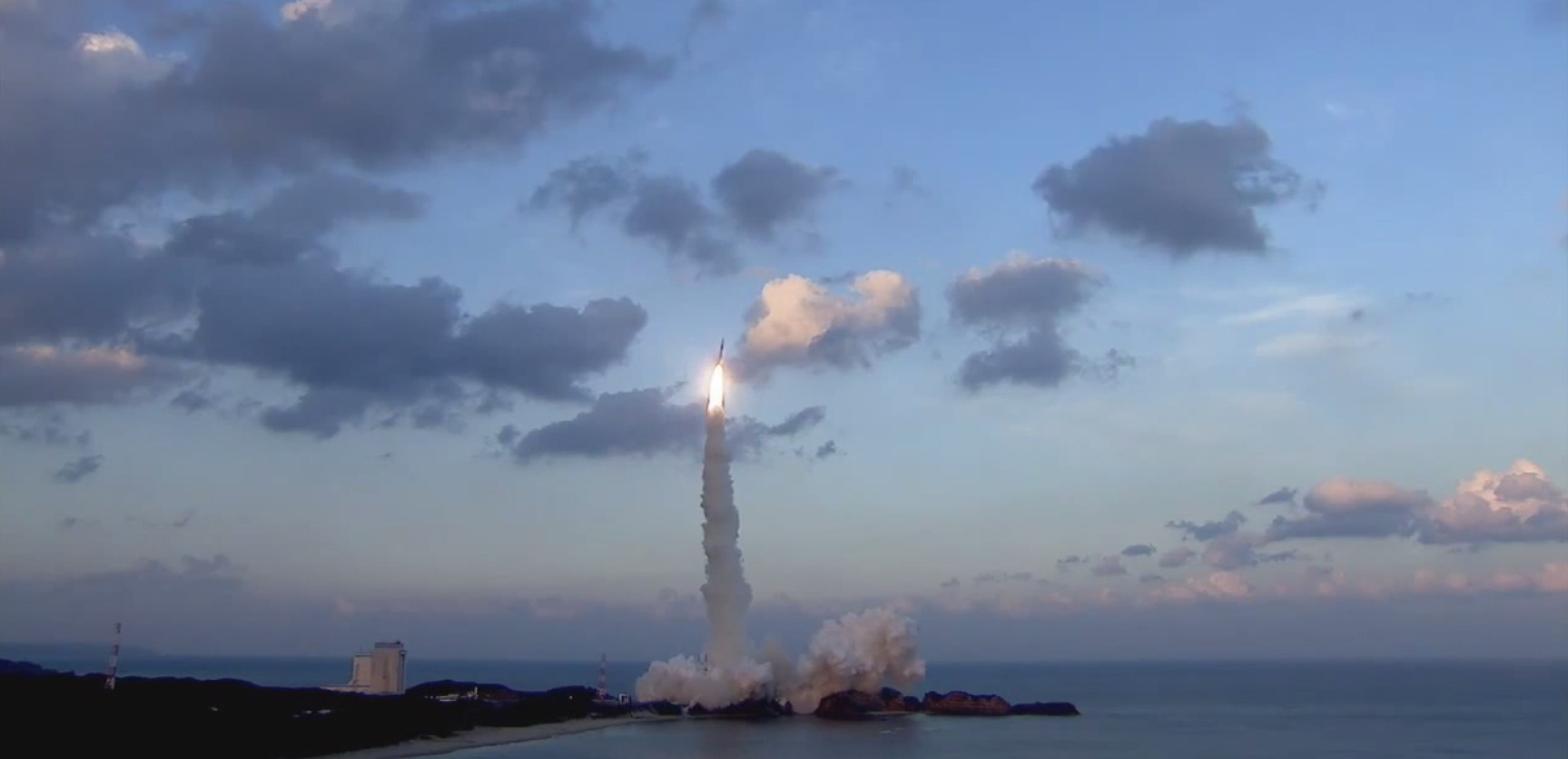
On February 17th, the Japanese Aerospace Exploration Agency (JAXA) launched a rocket into space with the X-ray Astronomy Satellite, also known as ASTRO-H, onboard.
Credit: NASA
Shortly thereafter, ASTRO-H separated from the spacecraft and deployed its solar panels. Operators then received data transmitted from the satellite and received at the Uchinoura ground station in Japan. All reports are that the satellite is currently in good health.
EXCITING NEWS: Direct Detection of Gravitational Radiation
It's a fitting coincidence. Just a few months after celebrating the 100th anniversary of Einstein's theory of General Relativity (GR), we have just heard that gravitational waves, a key prediction of GR, have been directly detected for the first time. The February 11th, 2016 announcement by the Laser Interferometry Gravitational-Wave Observatory (LIGO) team is one of the most important moments in the history of astrophysics. Here, I discuss how observations with NASA’s Chandra X-ray Observatory and other traditional observatories help complement the detection and study of gravitational waves.
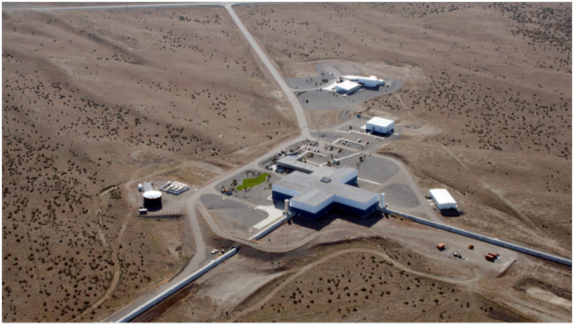
Figure 1: The LIGO Hanford Observatory. Credit: Caltech/MIT/LIGO Observatory
Gravitational waves are produced by violent events, such as the collisions and mergers of neutron star or black hole pairs, or the collapse and explosion of massive stars in supernovas. As a September 2015 news release by LIGO eloquently explains,